

Multiple Sclerosis Management
A diagnosis of multiple sclerosis can affect movement, strength, balance, walking, fatigue, coordination, sensation, and confidence.
For many people, symptoms can fluctuate from day to day, making it difficult to know how much to do, when to rest, and how to maintain independence without overdoing things.
At our service, we provide specialist neurological rehabilitation for people living with multiple sclerosis, with a strong focus on evidence-based treatment, fatigue management, and highly individualised rehabilitation.
Understanding the Different Types of Multiple Sclerosis
entity["disease","Multiple Sclerosis","Chronic neurological condition"] can present in different forms, and each type can affect people differently.
These include:
Relapsing-remitting multiple sclerosis
Primary progressive multiple sclerosis
Secondary progressive multiple sclerosis
Some people may experience relapses with periods of recovery, while others may notice a more gradual change in mobility, strength, balance, or fatigue over time.
No two people experience multiple sclerosis in exactly the same way.
Every MS Diagnosis Is Different
We understand that no two MS diagnoses present in the same way.
Each person experiences a unique combination of physical, cognitive, and fatigue-related challenges.
Some people may struggle most with walking and balance. Others may be more affected by fatigue, weakness, stiffness, sensory changes, coordination, or confidence leaving the house.
This variability means that effective treatment requires expert clinical assessment to accurately identify specific deficits, movement problems, and functional limitations.
Our rehabilitation programmes are built around the individual rather than the diagnosis.
Individualised Rehabilitation at Home
We travel to your home to provide neurological rehabilitation in the environment where you feel most comfortable.
Home-based rehabilitation allows us to see the specific challenges you face in day-to-day life and create practical solutions that are directly relevant to your routine.
This may include support with:
Walking and balance
Stairs and transfers
Fatigue management
Strength and conditioning
Mobility around the home
Falls prevention
Upper limb function
Outdoor mobility
Exercise programmes
Confidence and independence
Our approach is highly individualised, with tailored rehabilitation programmes that evolve alongside the condition.
This ensures that treatment remains relevant, targeted, and focused on maximising function over time.
Fatigue Management
Fatigue is one of the most common and disabling symptoms of multiple sclerosis.
For many people, fatigue has a greater impact on quality of life than weakness or mobility problems.
Effective fatigue management is not simply about doing less.
It is about understanding energy levels, planning activity more effectively, improving physical conditioning, and reducing the effort required for daily tasks.
We help people manage fatigue through:
Pacing and activity planning
Exercise prescription
Strength and fitness training
Energy conservation strategies
Improving walking efficiency
Reducing unnecessary effort in daily activities
Planning rest and recovery effectively
The goal is to help people stay active and independent without triggering excessive fatigue.
Evidence-Based Rehabilitation for MS
Research shows that people with multiple sclerosis can benefit from targeted rehabilitation and exercise.
Appropriately prescribed physiotherapy can improve walking, strength, balance, mobility, fatigue, confidence, and overall quality of life.
Our programmes may include:
Strength and conditioning
Balance retraining
Gait rehabilitation
Stretching and mobility work
Functional exercise
Gym-based programmes
Cardiovascular fitness
Task-specific practice
Outdoor mobility training
Falls prevention
Every programme is adapted around the individual’s symptoms, goals, fatigue levels, and progression of the condition.
Long-Term Support and Independence
Multiple sclerosis is often a long-term and changing condition.
That is why rehabilitation should not be generic or static.
We provide ongoing support, reassessment, and progression to ensure each programme continues to meet the individual’s needs over time.
Our aim is to help people maintain independence, stay active, manage symptoms effectively, and continue doing the activities that matter most to them.
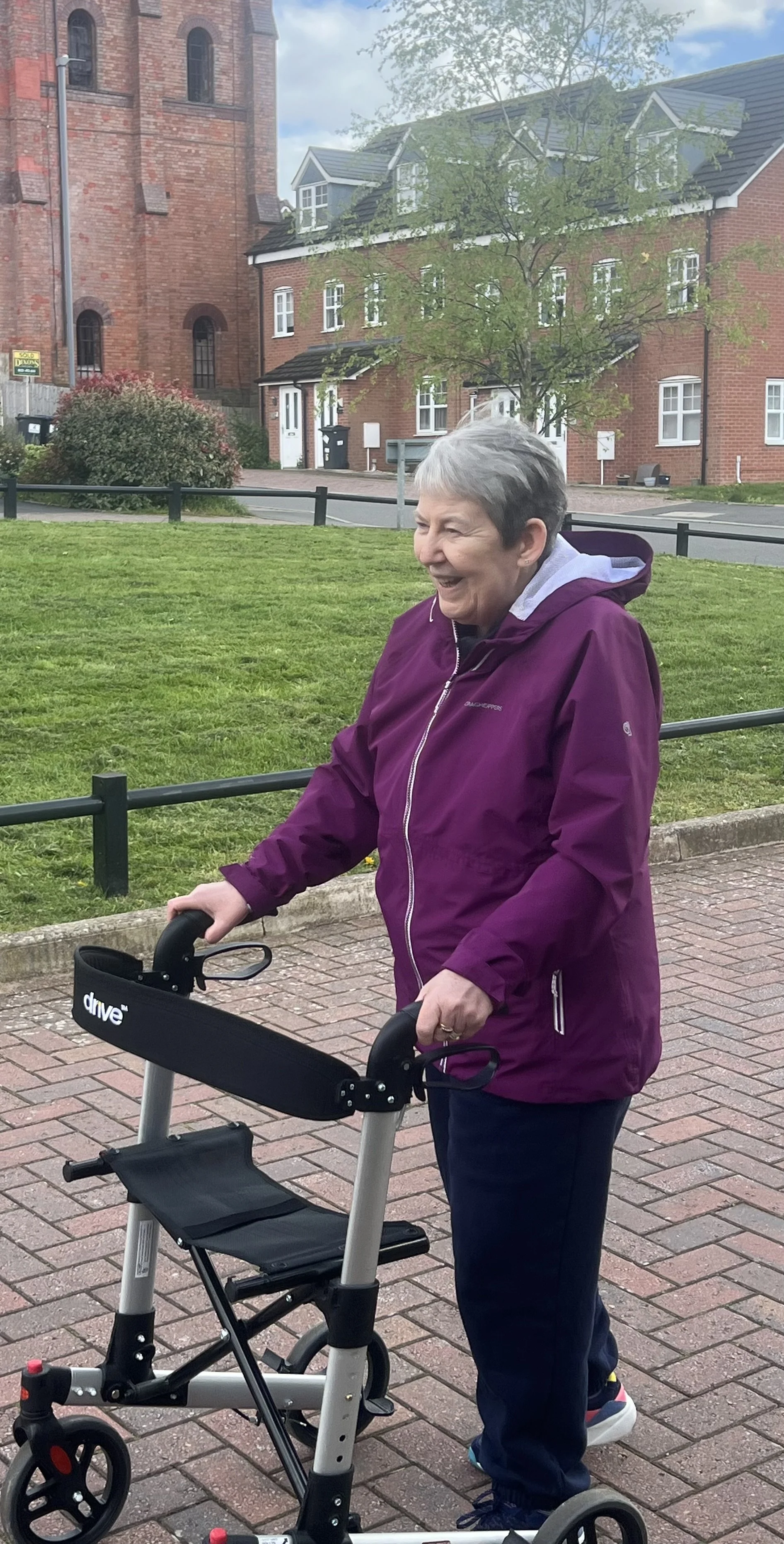
‘‘Iain has been amazing in his care for me and helping me return to normal. he took time to understand where I wanted to get to and how best to achieve it. He has been nothing but good humoured and kind every time he has seen me. He always makes people feel better about themselves and their abilities. He searches out ways to help you achieve your rehab goals’’ Anne (MS diagnosis)
See Anne’s full story below: