

Expert Stroke Rehabilitation
A stroke can have a major impact on movement, balance, mobility, speech, sensation, confidence, and independence.
For many people, the first few weeks after a stroke are focused on survival, medical treatment, and early recovery. However, rehabilitation should not stop once someone leaves hospital.
Recovery after stroke can continue for months and years when the right support, intensity, and rehabilitation approach are in place.
At our service, we provide specialist neurological rehabilitation for people after stroke, with a strong focus on meaningful outcomes, measurable progress, and helping people return to the activities that matter most to them.
Stroke Rehabilitation Should Be Goal Focused
Every stroke affects people differently.
Some people may experience weakness on one side of the body, reduced balance, difficulty walking, arm weakness, fatigue, pain, speech difficulties, or changes in confidence.
Because no two strokes are the same, rehabilitation must always be individualised.
We work with each person to identify the goals that matter most to them.
These goals may include:
Improving walking and balance
Reducing trips and falls
Improving arm and hand function
Returning to work
Getting back to driving
Returning to sport or exercise
Improving transfers and mobility around the home
Increasing confidence in public places
Improving fitness and endurance
Becoming more independent with dressing, cooking, and personal care
Our approach is built around helping people make meaningful improvements in real-life function.
Evidence-Based Stroke Rehabilitation
Stroke rehabilitation should be intensive, repetitive, task-specific, and evidence based.
Research shows that the brain has the ability to reorganise and adapt after stroke through a process called neuroplasticity.
This means that with the right type of rehabilitation, people can continue to improve movement, strength, coordination, and independence long after the initial stroke.
Our treatment programmes are based on proven neurological rehabilitation principles, including:
Task-specific practice
Repetition and intensity
Strength and conditioning
Balance retraining
Gait rehabilitation
Upper limb rehabilitation
Functional electrical stimulation where appropriate
Cardiovascular fitness training
Dual-task training
Fatigue management
Education and self-management
The goal is not simply to help people “cope” with their stroke. The goal is to maximise recovery and improve quality of life.
Improving Walking, Balance, and Mobility
Many people after stroke experience weakness, reduced coordination, altered walking patterns, and fear of falling.
We provide targeted rehabilitation to improve:
Walking speed
Balance and stability
Confidence moving indoors and outdoors
Stair climbing
Transfers from bed, chair, or car
Endurance and community mobility
Reduced trips, falls, and near misses
This may include hands-on therapy, treadmill training, strengthening exercises, balance retraining, gait re-education, and home-based practice.
Upper Limb Rehabilitation After Stroke
Arm and hand recovery is often one of the biggest priorities after stroke.
Weakness, spasticity, shoulder pain, poor coordination, and reduced hand function can make everyday tasks difficult.
We provide specialist upper limb rehabilitation to improve:
Reaching and grasping
Hand opening and closing
Shoulder movement
Grip strength
Dexterity and coordination
Functional tasks such as dressing, cooking, writing, and carrying objects
Upper limb rehabilitation is often overlooked, particularly in the later stages after stroke, but with the right approach, improvements are still possible.
Strength, Fitness, and Returning to Exercise
Stroke rehabilitation is not only about mobility.
Building strength, fitness, and confidence can have a huge impact on long-term recovery.
We provide individually tailored gym-based rehabilitation and exercise programmes to help people safely return to physical activity.
This may include:
Strength training
Treadmill walking
Cardiovascular exercise
Weight training
Functional circuits
Core stability work
Sport-specific rehabilitation
Exercise programmes are adapted around fatigue, balance, pain, confidence, cardiovascular health, and personal goals.
Results and Outcomes Focused Rehabilitation
We believe rehabilitation should be measurable.
That is why we track progress closely and focus on outcomes that matter in everyday life.
This may include improvements in:
Walking distance
Walking speed
Falls confidence
Arm function
Strength
Balance scores
Ability to manage stairs
Independence at home
Return to work or hobbies
Participation in exercise and social activities
Seeing progress, even in small steps, can make a huge difference to confidence and motivation.
Specialist Support Throughout Recovery
Recovery after stroke can feel overwhelming, particularly when people are unsure what they should be doing or whether further improvement is possible.
Our role is not only to provide expert rehabilitation, but also to provide education, structure, and support.
We help people understand their recovery, build confidence, and continue progressing beyond the limits they may have been told to expect.
Stroke recovery does not end after hospital discharge.
With the right rehabilitation, people can continue to improve function, regain independence, and return to the things that matter most to them.
‘‘IAB-Health’s exceptional expertise, compassionate care, and meticulous attention to detail have delivered truly life‑changing results. I wholeheartedly recommend their services to any stroke survivor seeking dedicated, professional support.’’ (Martin B, Stroke survivor’)
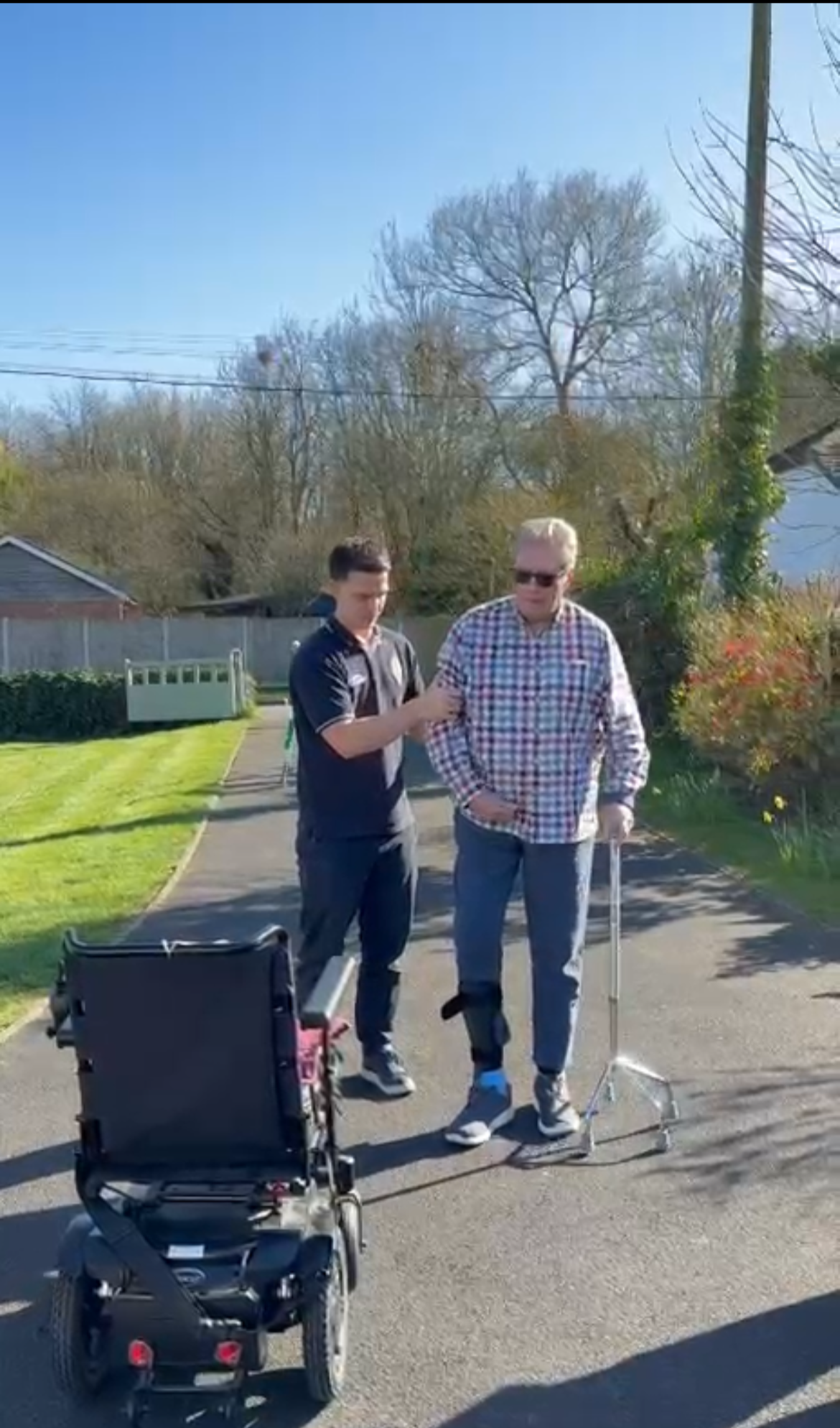
‘‘Home-based treatment proved to be the ideal solution. It allowed Roger to access consistent, high-quality rehabilitation in a familiar and comfortable environment, without the logistical challenges of hospital transport.
Having previously worked on stroke units, Iain brought a deep understanding of Roger’s condition from the outset. This meant therapy could begin immediately at the right level, with a clear focus on functional recovery.
Through a structured and intensive rehabilitation programme, Roger began to make significant progress. His balance and core strength improved, enabling him to stand independently. He regained the ability to perform functional movements such as transferring between bed and chair, walking short distances with support, and using a quad stick to aid mobility. He has even progressed to stepping into a car—an important milestone that has restored a level of independence and freedom.
Roger’s physical improvements have been remarkable. Despite ongoing sensory loss in his leg, he has regained strength and control, supported by regular exercise, including the use of a motorised bike and hydrotherapy sessions. His leg strength is now comparable to, if not better than, before his stroke.’’ (Nikki, Wife of Roger)